







ARTIST STATEMENT by YAMAN NKYMN
Oscar Wilde famously said, "The cynic knows the price of everything and the value of nothing." This aptly describes our current world. But what is value? It is defined by subjective aesthetics but these are not easy to achieve.
The act of leaving money for goods taken from an empty supermarket during disasters; the act of lining up and getting on a jam-packed train every day in a disciplined manner; do you ever wonder about this Japanese behavior?
Shinto is embedded in Japanese people as a part of their operating system.
In contrast to monotheism, Shinto is the philosophy that all things in the universe are divine beings.
This generates special types of duality: The active aspect is to treat things with respect for God, and the passive aspect is that things are always watching and measuring you. The latter can be described as a subjective and personal mass surveillance.
One of the functions of this surveillance camera is the concept of "bachi" (divine punishment). Japanese people believe that if they do injustice, they will suffer bachi. Naturally, the borderline of injustice is defined by the individual subjective consciousness of each person. Any deviation from the subjective aesthetics, which is unconsciously defined by each individual, is the target of the "bachi".
A byproduct of this is Japanese craftsmanship. Throughout their lives, craftspeople continue to seek out what truly satisfies their own subjective aesthetics. Subjective aesthetics takes precedence over market demand and economic efficiency. When these aesthetics are not satisfied, or when the priority is switched, we fear and receive a "bachi".
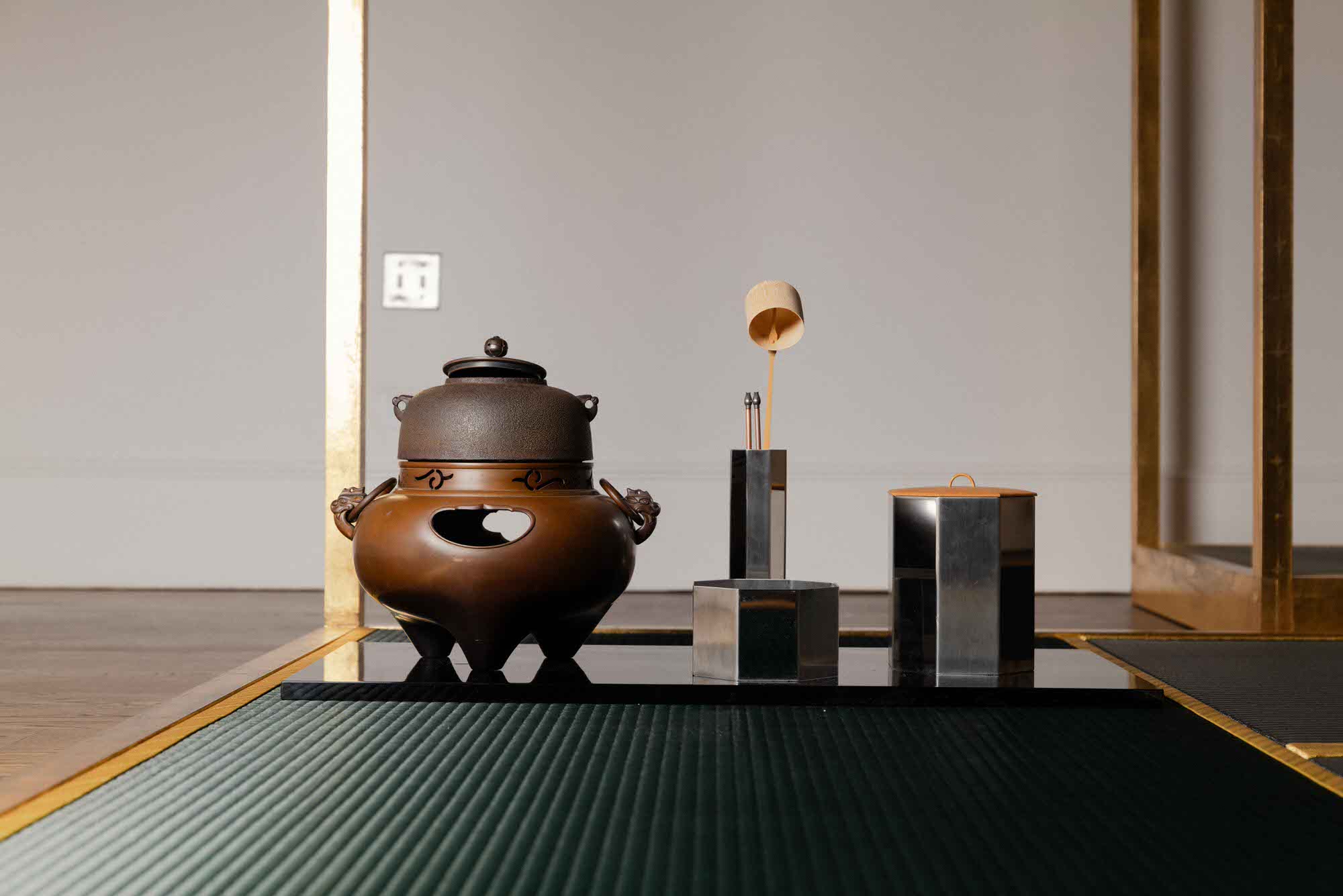
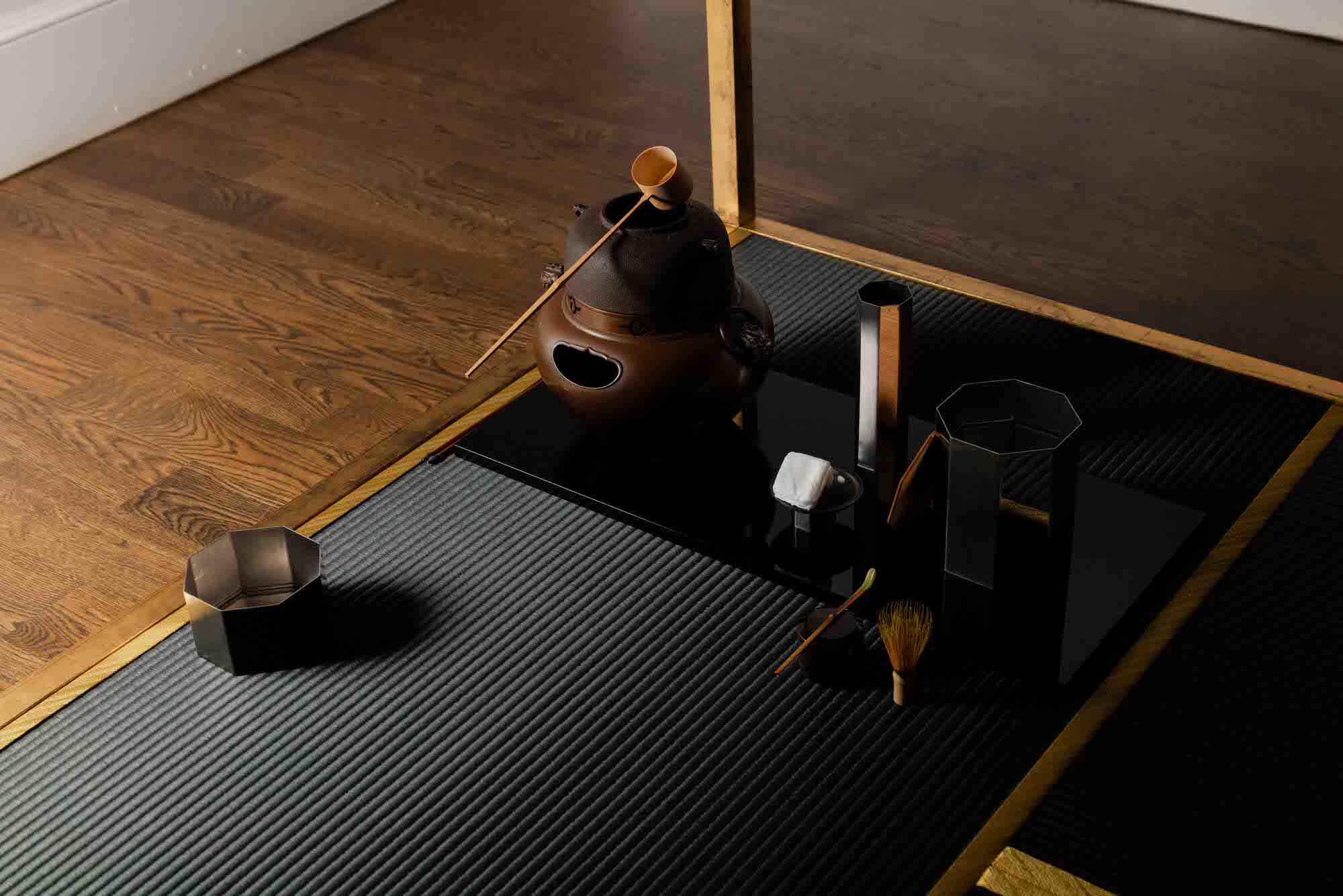
One of the ultimate examples is the Japanese tea ceremony. The tea ceremony is not about matcha (powdered green tea). It is not a tea bowl. It is neither a tea house nor kaiseki cuisine. The tea ceremony is communal, subjective aesthetics. It is subjective aesthetics that have spread and become so influential that in Japan in the 16th century it became a medium of value exchange based on aesthetics, on a parallel with currency.

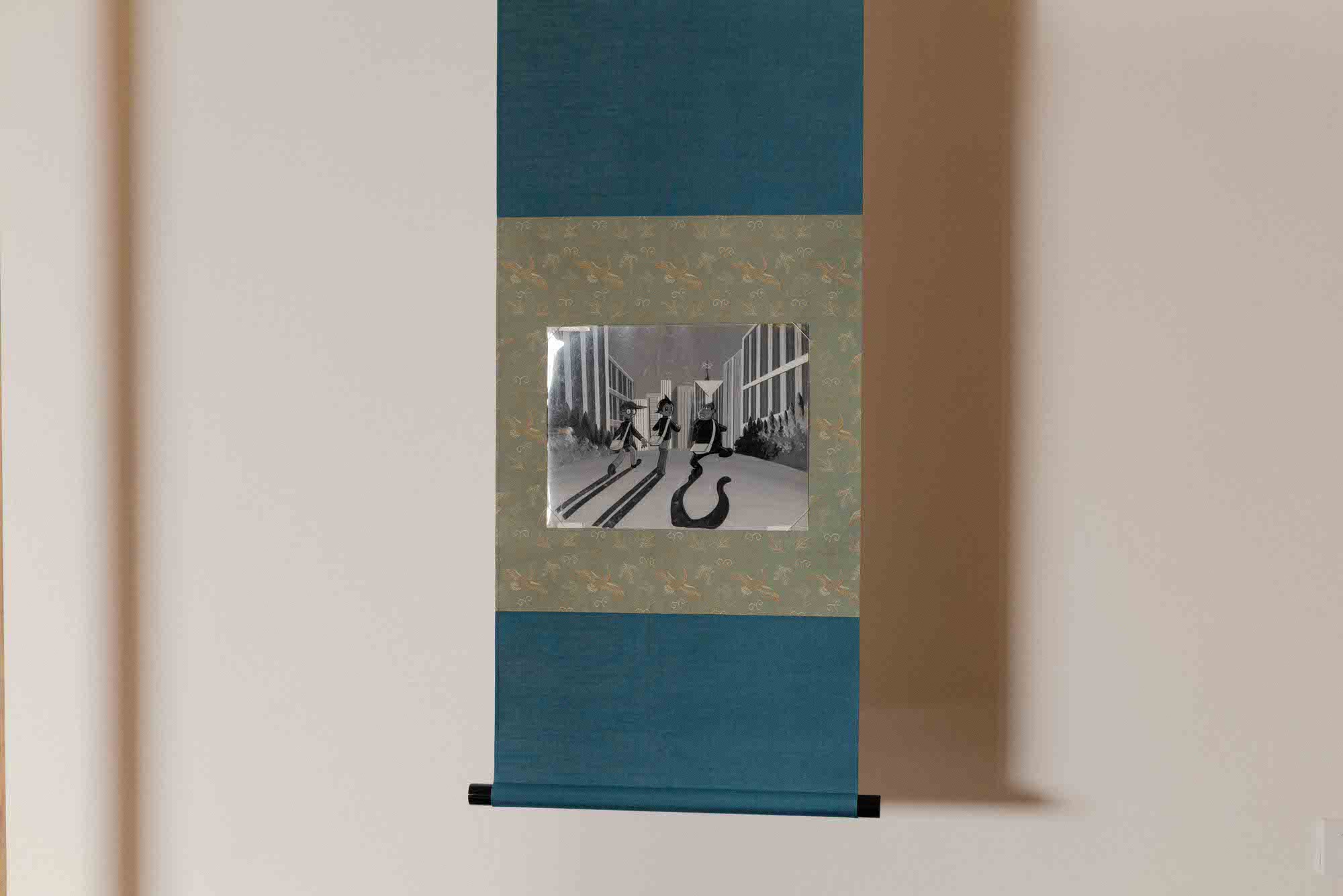
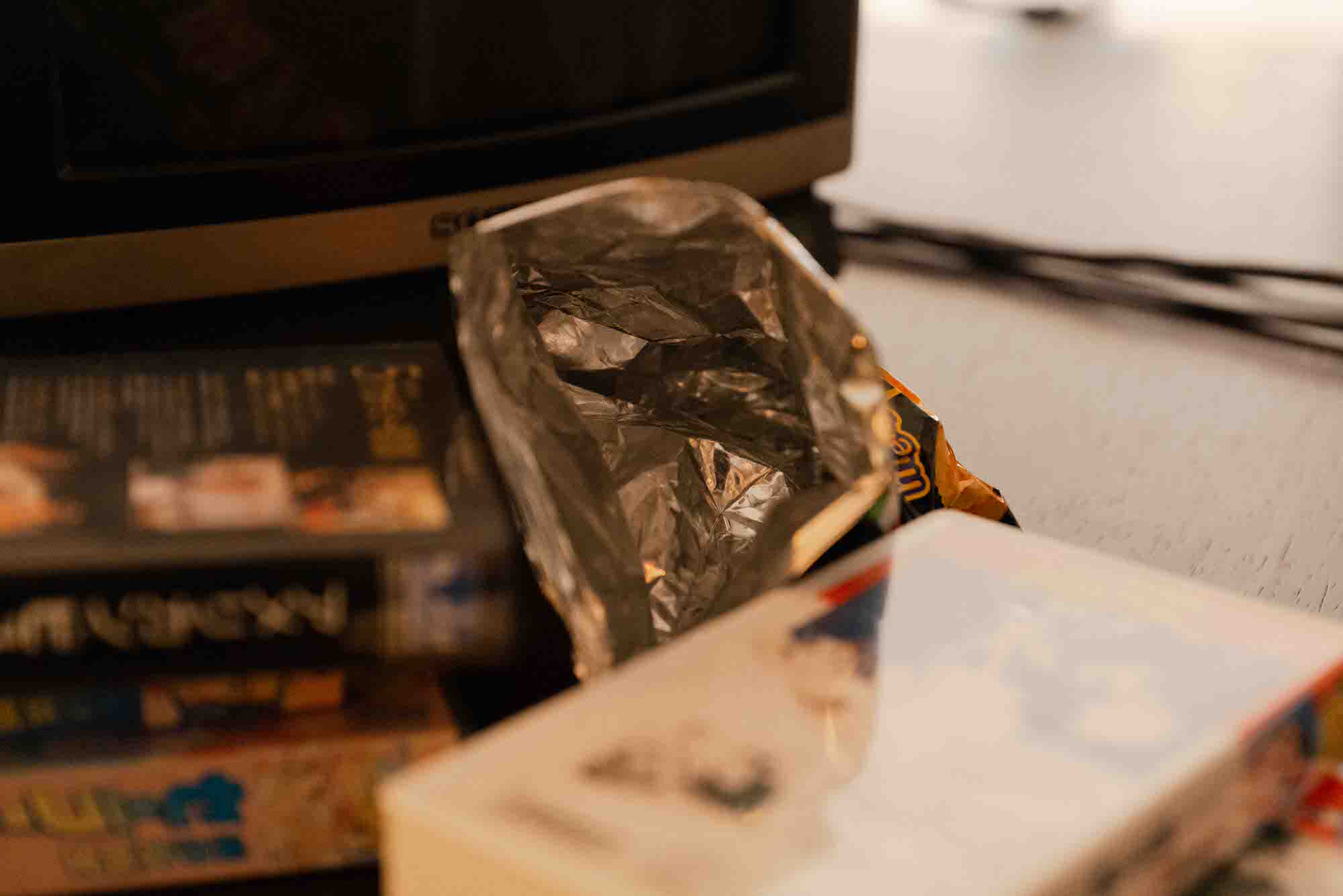
Another ultimate example is Japanese Anime. Craftsmen functioned and a fanatical audience, we now call OTAKU, interacted; the serial killer case in Japan in 1989 divided Anime from society and produced the word OTAKU as a discriminatory term. In a sense, it was a chemical reaction of subjective aesthetics in a divided and closed community.
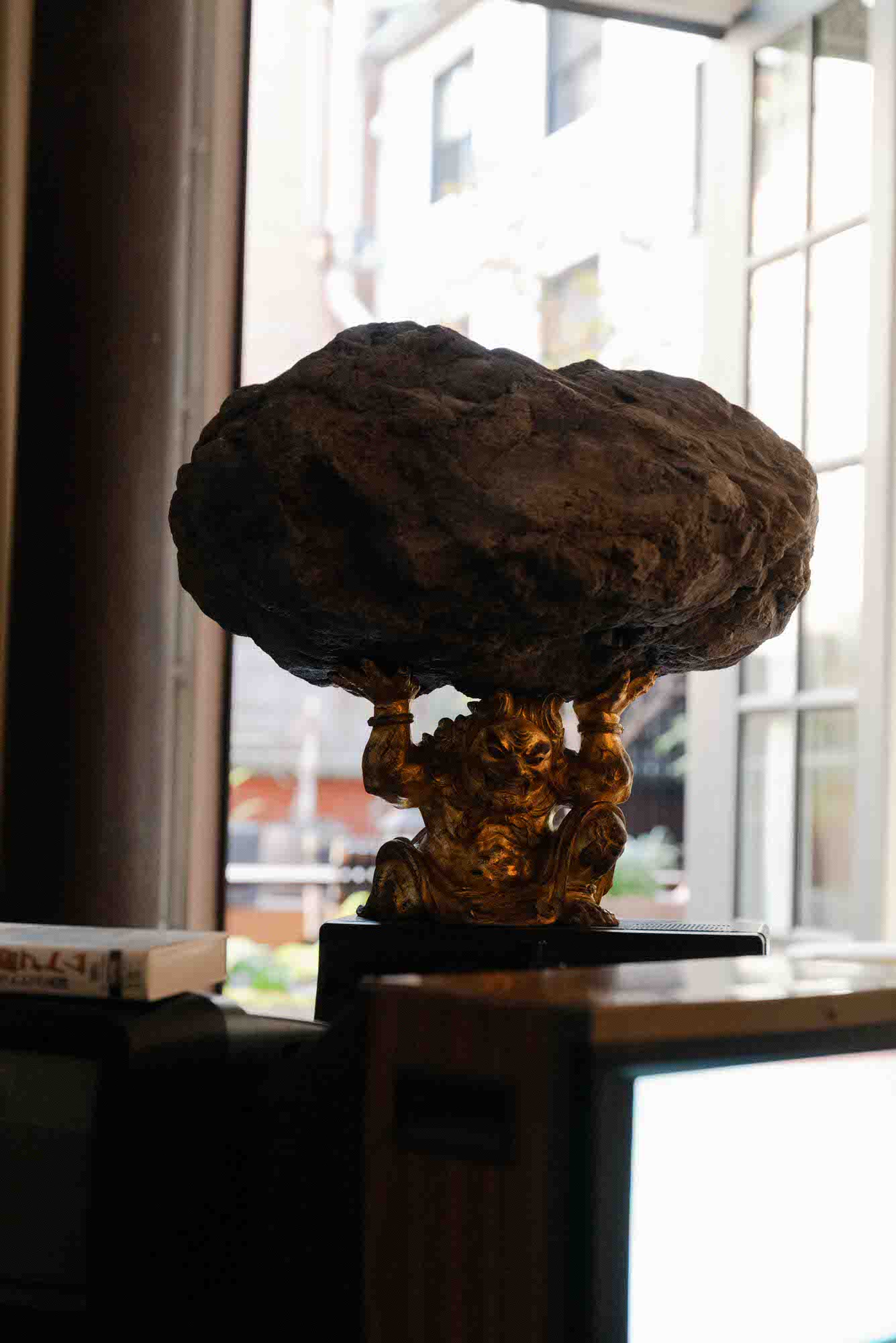
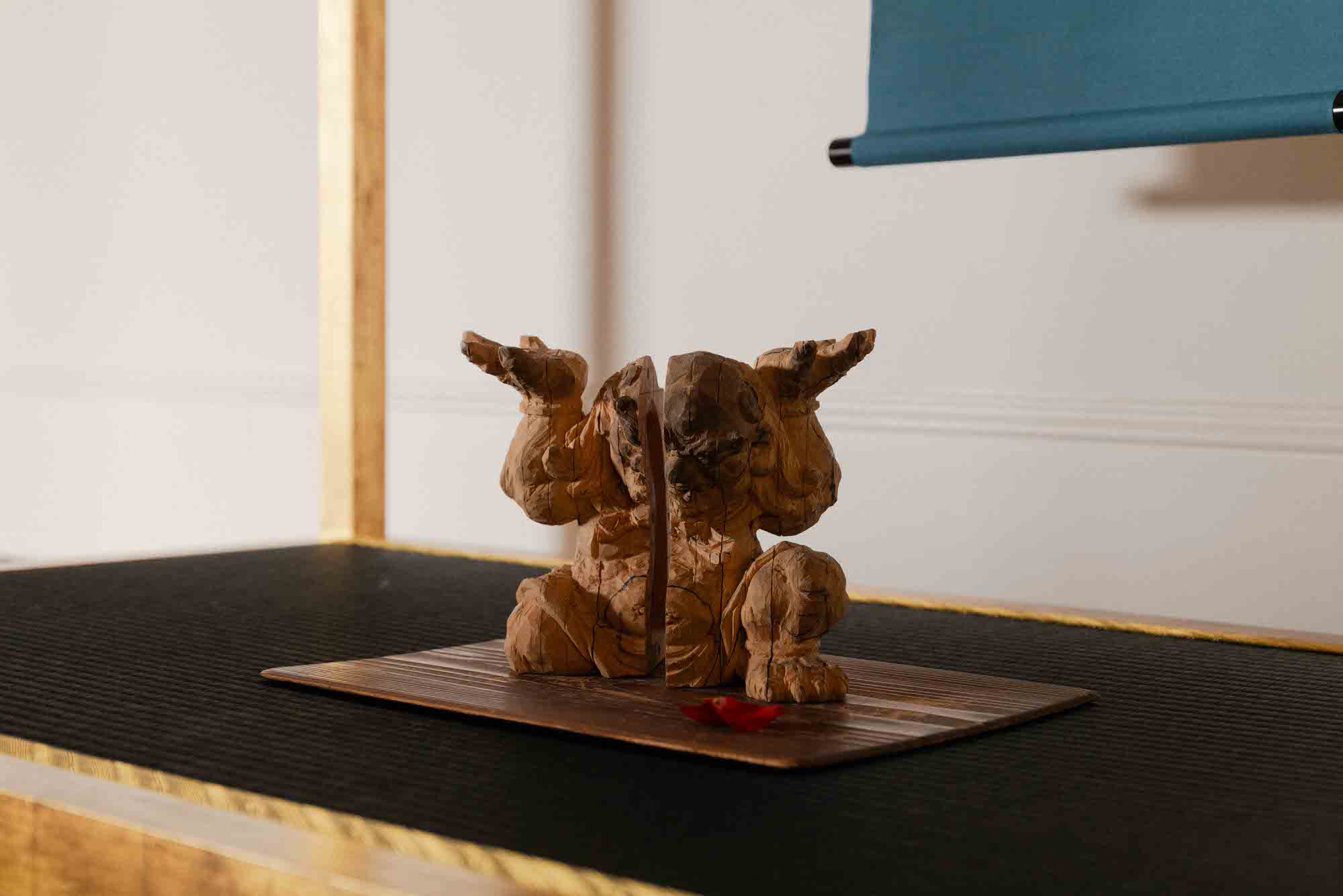
In this work, you, the audience and I, have juxtaposed observations of the tea ceremony of 500 years ago and Anime of 50 years ago. What they have in common is subjective aesthetics. Both had a peak period of only 50 years, and both peaked out as the drivers shifted from subjective aesthetics to objective aesthetics, crossing the chasm.
In the phase that relies on objective aesthetics, the priority changes from seeking to transmission. Transmission then promotes distortion. I have expressed this issue in our concept of "Information Transmission and its (Ingrained) Distortion.
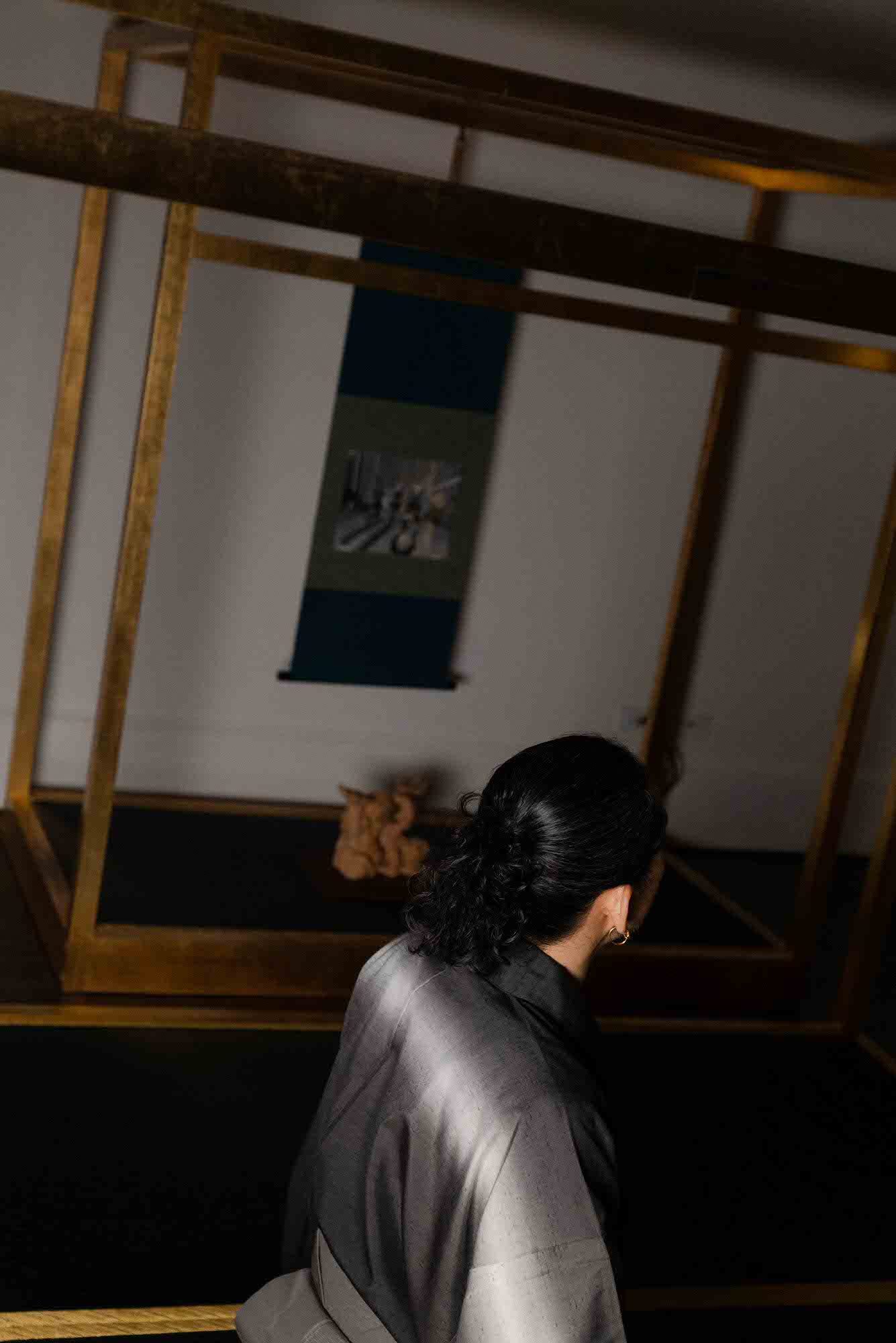
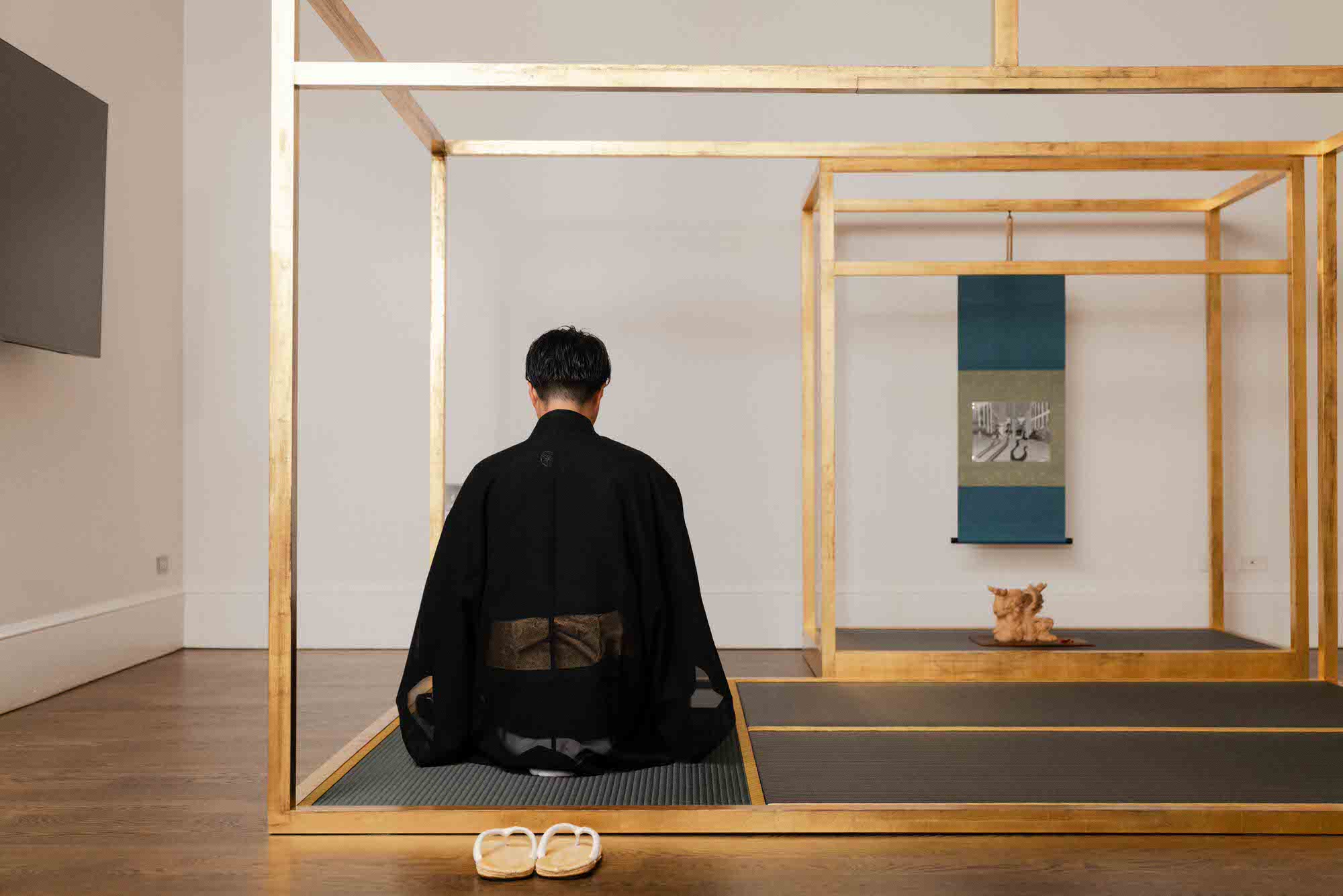
In my work, I have reconstructed the tea ceremony in the 16th century during the era of Sen-no-Rikyu, and Anime in the latter half of the 20th century, the peak of their eras. I believe that experiencing their peaks, physically and subjectively, will help us regain our subjective aesthetics.
Together we are inspired, together we learn, together we evolve. We develop our thinking toward a world without division. The ultimate goal of Japanese culture is the dissolution of inner and outer concepts- becoming one with the world.
I present this not as Orientalism, but as a serious, interpretable experience. This work, reconstructed in the language of contemporary art, is not a Japanese tea ceremony but Relational Art - a new experience to be interpreted in your own cultural context.
- YAMAN NKYMN



and supported by the Agency for Cultural Affairs, Government of Japan.